Tuesday, February 12, 2008

Protest of Electronic Voting Machines

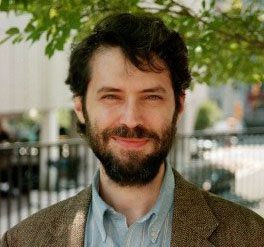
This morning, February 12, 2008, I appeared at my polling place in Mosby Elementary School to cast my vote in the Democratic presidential primary, but refused to use the electronic voting machines, due to their inherent unreliability. The chief and assistant chief of the poll determined that this circumstance (my claim that the machines are unreliable) was not clearly covered by their rule books, so they phoned the Fairfax County Electoral Board. After they spoke to officials there, a County official also spoke to me by phone. After a lengthy discussion, the official on the phone spoke to the assistant chief of the poll and authorized me to submit a provisional paper ballot, although they were unable to assure me that my vote would be counted. They further explained that I have the right to appear before the County Electoral Board at Noon tomorrow at the Fairfax County Government Center, Room 315-C, to defend my ballot.

I will appear before the board and base my case on Virginia Code 24.2-642, which begins, “When any voting or counting device becomes inoperative in whole or in part while the polls are open…”, and the fact that it is impossible to know if the voting computer is recording all votes accurately.

My position is that there are only two ways for a person to know that an electronic voting machine is accurately recording votes and thereby fully operational. 1. Have the voting machine produce a paper record that allows each voter to confirm that their vote is accurately recorded on the paper record and use those paper records to validate the records and tabulations of the voting machine, or 2. Have a person who understands every line of code in the software and both the original and current condition of every physical circuit in the computer hardware verify that no errors can occur. In the first case, the use of a voting machine is rendered moot except that unvalidated election results can be produced very quickly. The second case is not humanly possible, and even if it were, we should not trust our election results to any single person.

Official reasons I have heard for the use of electronic voting machines are: 1. They save money, 2. They provide rapid results, and 3. They count more accurately than people counting paper ballots. Unofficial reasons, I suspect, include overly optimistic marketing presentations of the companies who manufacture voting machines, which gloss over the systemic flaws in the voting machine concept.

The fundamental purpose of an election is to provide citizens with the ability to elect representatives by popular, anonymous votes, and there must be a method by which ordinary citizens can validate all votes, otherwise our elections are vulnerable to errors serious enough to effect the outcomes of elections, whether those errors are intentional or unintentional. The purpose of an election is not to save money nor to provide rapid results.

Saving money and providing rapid results should only be considered for methods that improve voting systems that meet the fundamental purposes of elections, which must include the possibility of comprehensive verification. A claim that voting machines count more accurately than people is not true in the case of machines without voter-validated paper trails, because without voter-validated paper trails, it is impossible to know the accuracy of the voting machines' records. The executives and technicians at the voting machine companies say, "Trust us." I, for one, will not.

For these reasons, I will never again use a voting machine that does not include a paper record that allows me to verify that my vote was correctly recorded, so that the rapid-tabulation systems can be verified. I will continue to appear at my polling place in every election and request either a fully auditable system or a paper ballot.

John Lambert
Fairfax, VA


For further reading:

  • What's More Important: Accurate Elections Or Fast Results?
  • You Can't Patch An Election
  • Black Box Voting
  • E-Voting Undermines Public Confidence In Elections Even Without Evidence of Wrongdoing
  • Judge Voids Election Results Over E-Voting Results That Couldn't Be Audited
  • Article index of voting machine issues

  • UPDATE: 2/13/2008

    Well, I got to defend my ballot with the Fairfax County Electoral Board, and it was a fun experience. They had 3 voting members for this process and 2 advisors, and they were all intelligent, reasonable people who were focused on following the rules to ensure the integrity of the election. Excellent! It was determined that the person who authorized me to complete a provisional ballot should not have done so, as the rules provided those only for people who were not in the polling book, but contended that they should have been in the book, not for people who wanted a paper ballot because of any other reason. Well, the rules for the Board are different from the rules at the poll, so the issue was now different. One voting member took the position that I was eligble to vote, and they had my sealed vote, so they should count it. Another took the position that I shouldn't have received the provisional ballot in the first place, so it should not be counted. The third's position was that I was trying to "strong-arm" a way to use a paper ballot, when the rules did not provide for that (which was correct), so he was opposed to counting my vote. Then they asked the advisors about precedents and were told that this issue has arisen in the past, and the votes were counted. Based on that insight, they all agreed to count my vote.

    The best thing, though, is that when I inquired about how I could pursue moving Virginia away from non-voter validated voting systems, they told me that it had already been done. Last year (I probably missed this in my research because it was so recent), the Virginia Legislature passed a law that all new voting equipment must include the option to process paper ballots. And there will be at least four in use in Fairfax County this November. (And they said that they would make sure that one of those machines was in my precinct!)

    Tuesday, January 8, 2008

    Everything Has An Upside

    Personally, I don't recommend you try to develop peripheral neuropathy for any reason, but if you're stuck with it, there can be advantages...

    When I was in the neighborhood of ten years old, I accidentally raked the index and middle fingers of my left hand across the rotating blade of a table saw. It sliced into each finger tip parallel to my fingernails and took out chunks of meat. I was surprised at how much blood could come out of fingers, since there aren't any arteries that far from the heart. But those little veins and capillaries carried an awful lot of blood. Yuk. I hate seeing blood. Especially mine.

    Of course, the wound healed over within a week or two, but those fingertips were still sensitive to touch for a long time after that. Eventually, though, they got to where I didn't notice them any more.

    That is, until the first time I tried to play a guitar. Trying to fret the strings was too painful to endure. Yeah, I know, it hurts every new guitar player until calluses form. Except my index and middle fingers hurt far worse than the other two fingers, especially when I pressed right on the scars in certain directions, so I'm pretty sure that was worse than usual. At any rate, it was bad enough to keep me from trying for more than a few minutes once every few years.

    Now, take that scenario, add a couple of decades of nerve deterioration in my hands, and viola, those two troublesome fingertips no longer hurt too much to fret a guitar! They still hurt a little bit, but I figure they're about the level that most people would normally feel. That's where my neuropathy really pays off! :) And as an added bonus, my ring and little fingers on my left hand don't hurt at all... they're too numb!

    My best neuro-doc has also told me that my peripheral neuropathy may improve eventually, since it was caused by deficient levels of thyroid hormones that is now being controlled. So, I may lose numb-finger "advantage", but if I do, you can be sure I'll have well-developed calluses long before then. Make hay while the sun shines, as they say, or in this case, make calluses while the pain is numbed!

    Why guitar? I couldn't stand the poor sounds I was getting out of my violin long enough to get to the point where it wasn't too annoying. I don't really care much for the sound my autoharp makes. My trumpet is a little too LOUD to practice whenever I want. The guitar is easy to get good sounds out of if you can hold the strings down, I like the sound I get with thumb picking/strumming (don't care much for the sound I get from picks), and its quiet enough that I can practice any time I want!

    Oh, and why are my hands and arms numb, but the nerve damage in my feet causes a nasty burning sensation? I dunno. It's relatively common for peripheral neuropathy, but no one seems to know why some people get burning sensations vs. numbness in various places. That's one of the 23,917,603 reasons I say that medical science, like all other sciences, is still in its infancy.

    Thursday, November 29, 2007

    Ouch Relief

    Well, the nerve blocks were nice for a few hours each time, but then they wore off. Nothing was helping much and we (the doctors and I) weren't making useful progress in figuring out exactly what was wrong with my muscles, ligaments, and tendons, let alone why.

    I can now report very good news, however. About a month ago, I had my annual physical, which showed that my cholesterol was finally back into a healthy range, so I stopped taking Lipitor. A few days later, my muscle/ligament/tendon problems were noticably better, on average. And kept getting better. I didn't want to blog this until now, thinking that couldn't be it, and I might start getting worse again.

    My neurologist has just told me that considering all the circumstances, he's certain that my muscle problems for the last 9 months was indeed due to Lipitor side-effects, despite the fact that I was on Lipitor for a couple of years before that without those effects. As I've started telling friends and relatives about the Lipitor connection, now they've been telling me, "Oh, you were on Lipitor? I could have told you that causes muscle problems." Nothing like hindsight...

    We have no idea why those side-effects kicked in all of a sudden, but boy, what a relief to be rid of them, and to know what the cause was. That was kind of like my nasty experience with Cymbalta, which the neuro-docs put me on a high "theraputic" dose of to try to ease the burning in my feet. I was on that for a long time also before side-effects kicked in and knocked me sideways.

    So, I've been perking up, muscles/tendons/ligaments are back to "normal" for me.
    I've gotten caught up at work, and things are looking rosy again. And my hobby activity is picking up again, as evidenced by this post! The only pills I'm on now are Levoxyl (thyroid hormone replacement) and 3000IU/day of vitamin D, so I shouldn't be getting any new side-effects from miscellaneous drugs.

    A moral to this story? Perhaps that perscription drugs can be just as dangerous as illegal drugs. And no, I don't use illegal drugs... I have enough problems without intentionally causing more.

    Thursday, September 20, 2007

    Leg? What leg?

    My left leg (below the hip/groin area, above the ankle, and excluding the knee), doesn't hurt as much as my right leg, and I think that can only be due to the nerve block & cortisone derivative treatment earlier this week. The funny thing is, those parts of my legs hurt so much less than other parts, the other parts have held my attention to the point that I didn't even realize until now that those parts of my legs were hurting. Hm... is that good or bad?

    Well, I'm still going to do my best to follow advice I got many years ago, from my first pain management specialist: ignore it all as much as you can and get on with things. That doesn't always work, but it's better than the alternatives.

    Tuesday, September 18, 2007

    Ouch

    My excuse for not posting in a long time is that I've been in a lot of pain. Peripheral neuropathy due to hypothyroidism. Yuk. I've been able to keep up with my full-time job, but just barely. Yesterday a neurologist injected some nerve-block type stuff in some muscles and tendons in the left side of my butt. The goal is for us to compare how that effects my left side to my untreated right side. It's a diagnostic process right now. The first few hours were pretty nice, with a neglible amount of pain in my left butt, and even a little less pain in my left leg, but then it started fading, as expected. I'll see that doc again in two weeks. Right now, I'm really wishing I could have a pain free part of me again.

    Thursday, June 7, 2007

    Pig Track

    7 June Update: This week, 143 even. I think next week's weight-in will be the final one for this event.


    19 Apr Update: Last week, 146.5, this week, 144.5. My long term target was 145, but I think the Pig Club considers it a good thing if you weight less than the weight that was your original target.


    What is the Pig Club?


    6 Apr Update: Last week I wasn't at HUD, so I missed the weigh-in. This week I'm down to 147 even.

    15 Mar Update: Last week I was down to 148. This week I'm down to 147.5 -- just haven't been very hungry...

    24 Feb Update: Last week I was up slightly to 153. This week I was down to 150, earning myself the coveted title of Lean Machine of the Week. Who cares about emmies, grammies, and oscars?

    9 Feb Update: The Pig Club's tracking system can't handle a goal of staying the same weight, so I've changed my goal to lose 5 pounds from my starting weight. And I'm headed in the wrong direction...

    Sunday, June 3, 2007

    Update & Poem

    Hmm. I haven't posted in over a month. Well, that's about when my muscles started going on strike. The first 3 1/2 months of this year seemed like my body was improving steadily, with just a few minor setbacks now and then. Then my muscles started tightening up.

    No big deal, I always have a prescription of muscle relaxers (methocarbomol) from my doc, and I usually keep some on hand. I just take those for a day or two, the muscles get over whatever was causing the problem, and I'm no worse for wear. Except this time.

    The problem hasn't subsided, is worse than ever before, and the muscle relaxers have barely kept me functional enough to do my job. I have an appt this coming Friday to talk to the doc again to try to figure out what the cause is so I can start improving again. She's a great doc, I procrastinated making an appt, and it takes a long time to get one, because she's so popular.


    Okay, this isn't Carla's poem, it's mine. But I don't wanna create a new category for one entry, and "Carla's poetry" is the closest. It's the only poem I've ever written that I like. And I thought it had been lost forever, but Carla had copied it years ago, and just found it. This poem is from a guy (me) who used to worry about the "waste" of giving cut flowers as a present, until he realized...

    An Economist's Justification

    "A waste of money,
    these flowers will rot!
    They'll dry up and wither,
    and then what have you got?"

    Yes, I know my dozen messengers
    will not produce like kind,
    but even if they do prove brief,
    I certainly will not mind.

    For regardless of their life-span,
    and their non-regeneration,
    yet they provide a forum
    of unequaled demonstration;

    The Love that these kind friends reflect
    says, "I love you a lot!"
    And when these sweet red roses,
    with their joy have been forgot,
    your knowledge of my love for you,
    of a certainty, will not.

    Thus their cost is not so great,
    when their true benefit you see --
    for these flowers tell the whole world
    that you're worth everything to me!

    P.S. Regarding that last line. You always have been. You always will be.

    Sunday, April 22, 2007

    Prosperity for Posterity

    Prosperity for US
    Well, I read about Prosper.com a few months ago in Readers Digest magazine, but forgot about it until this past week. It's a pretty cool peer-to-peer loan system for U.S. residents founded by the guy who started ELoan.com, and I've opened an account (it's free) and started fiddling with it. (For details on how it works, visit their web site.)

    This prompted me to look at our debts, and I was surprised to find that we have 3 credit card accounts with small balances that have exorbitant interest rates. So, I studied up how to apply for a loan on Prosper, joined a group, got my info verified, and posted an application for a $5k loan to pay off those 3 credit cards. I put in the maximum interest rate allowed by Virginia, 11%, and it got fully funded within minutes. However, I'm letting the listing stay open for the maximum time of 10 days, and since it was fully funded at 11%, additional lenders (individual investors) have been bidding to get a piece of my loan, thereby bidding down the interest rate, which is now below 10%. Way cool! Check it out:


    Bid on my listing at Prosper, people-to-people lending


    You can borrow, you can earn money by lending, or you can earn money by managing a group.

    Prosperity for the rest of the World
    One guy borrowing money via Prosper is using the money to reinvest, partly in microloans at kiva.org. I never heard of kiva.org, so of course I had to check it out.

    Kiva (from the Swahilli word for "agreement") allows anyone to make microloans to the working poor in some of the poorest areas of the world. The staff at Kiva vets each borrower, and though the amounts are generally small by U.S. standards, they can have profound impacts on the people who receive these loans.


    Some of these folks may never have another opportunity like this to improve their and their families lives, and you can help. You can make a small loan to someone on the other side of the planet and improve their lives forever.


    Kiva - loans that change lives

    Saturday, March 17, 2007

    Physics 4.0

    Light -- is it a particle, or is it a wave? The answer, of course, is that it is neither, or both, depending on your point of view. But it's not one or the other.

    I was looking forward to starting a new career in physics someday, probably two or three careers from now, and resolving the particle vs. wave discrepancy. Alas, it looks like I'm too late, as Xiao-Gang Wen (MIT) and Michael Levin (Harvard) have come up with what may be just that resolution. Here's a summary explanation in New Scientist magazine.

    String-nets. It's elegant. Its covers a lot of concepts. It appears to be validated by the existence of a mineral named Herbertsmithite. (No kidding, it's discoverers named it after a man they admired.) And I'm betting it will even lead directly to a quantum theory of gravity.

    If Newtonian physics was Physics 1.0, then Relativity could be Physics version 2, and Quantum Mechanics could be Physics 3. String-nets could be the beginning of Physics 4.0. Pretty cool!

    But... so far it doesn't seem to resolve my dilema of entanglement vs. relativity, so maybe there's still room for me to make a contribution to physics by redirecting my efforts. Eventually...

    Thursday, March 1, 2007

    Simple vs. Complex

    A friend recently suggested that complex people tend to have simple ring tones (ring, ring) on their cell phones, and simple people tend to have complex ring tones (musical ditties), just based on her personal observations.

    So, is my ring tone simple or complex? Well, my phone's almost always on vibrate, so I don't know what that says about me. But for those rare occasions when I have the sound on, my ring tone is a recording of my own voice saying, "Telephone... telephone..." What do you think? Is that simple, complex, or just strange?

    Saturday, February 24, 2007

    Taking People For Granted

    I've always heard that it's wrong to take people for granted.

    Why is that?

    Carla and I have lots of moments that we concentrate on each other and drink in every little nuance of our friendship, but the vast majority of the time, we don't... we take each other for granted.

    Between the times we verbally profess our love for each other (about every few hours), we take it for granted that we love each other. Between the times we're physically intimate (about every few hours), we take it for granted that we're being faithful to each other. [Just kidding about being intimate every few hours... sometimes we take a day off to rest!] Between the times we make plans together, we take if for granted that neither of us will make big decisions without involving the other.

    So, yes, we take each for granted. Is that a bad thing? We know each other, we help each other, and we trust each other, and that's why we can take each other for granted. That seems to me like a pretty wonderful thing!

    Monday, February 19, 2007

    John's Famous Relatives

    Our family tree on Ancestry.com now has over 1700 people in it, thanks to many contributions from family and ties into the One World Tree. This goes back far enough and wide enough for the web site's famous relative search tool to work. And, it turns out I have some bad apples in the family, such as train robbers and politicians. Good or bad, here are some famous people related to John Donovan Lambert:

    James Matthew Barrie (1860-1937)

    Scottish Novelist
    James Matthew Barrie wrote the stories of Peter Pan and The Lost Boys. His college acquaintances include Arthur Conan Doyle and Robert Lewis Stevenson, with whom he wrote for the university newspaper.
    Relationship: 3rd Cousin 12 times removed

    Lucretia Rudolph Garfield (1832-1918)

    First Lady
    Lucretia Rudolph Garfield, wife of President James A. Garfield, wasn't interested in the social duties of the First Lady, but her genuine hospitality made her gatherings very enjoyable.
    Relationship: 6th Cousin 7 times removed

    Mary Edwards Walker (1832-1919)

    American Activist and Surgeon
    Dr. Mary Edwards Walker was a feminist Union surgeon. She was given a Medal of Honor after the Civil War for her bravery as a prisoner of war, making her the only woman to have received this medal.
    Relationship: 7th Cousin 5 times removed

    Theodore Roosevelt (1858-1919)

    26th President of the United States
    Theodore "Teddy" Roosevelt was the first president to win the Nobel Peace Prize. With the assassination of President McKinley he became the youngest president in the nation's history. He brought new excitement and power to the presidency as he vigorously led Congress and the American public toward progressive reforms and a strong foreign policy. His popular presidency had many accomplishments, but he personally considered his greatest accomplishment to be the creation of the Panama Canal. The "Teddy" Bear got its name from President Roosevelt.
    Relationship: 6th Cousin 7 times removed

    Henry David Thoreau (1817-1862)

    American Author
    Spending 2 years "living simply" in the forest was the premise for Henry David Thoreau's famous book, "Walden". Thoreau also wrote "On the Duty of Civil Disobedience", an essay that encouraged people to prohibit governments from having absolute power.
    Relationship: 6th Cousin 8 times removed

    Lucille Ball (1911-1989)

    American Actress and Comedian
    Lucille Desiree Ball was the comedic star of the 1950s TV show I Love Lucy. Often called, "The Queen of Comedy," Ball has acted in Broadway productions, motion pictures, and TV shows.
    Relationship: 9th Cousin 3 times removed

    Desi Arnaz (1917-1986)

    Cuban American Performer
    Desiderio Alberto Arnaz was a Cuban-American musician, comedian, and actor. He performed with his wife, Lucille Ball, for several years before their divorce.
    Relationship: 11th Cousin 1 times removed

    Edward Winslow (1595-1655)

    Mayflower Passenger
    Edward Winslow served as the governor of the Plymouth Colony. He also signed the Mayflower Compact.
    Relationship: 12th Great Grand Uncle

    Robert Boyle (1627-1691)

    Irish Physicist
    Robert Boyle is regarded today as the first modern chemist. He was also an alchemist and a physicist.
    Relationship: 3rd Cousin 12 times removed

    Charles Carroll of Carrollton (1737-1832)

    Maryland Representative
    Charles Carroll was the only Catholic signer of the Declaration of Independence. His signature reads "Charles Carroll of Carrollton", so he is widely known as such.
    Relationship: 5th Cousin 8 times removed

    George Ross (1730-1779)

    Pennsylvania Representative
    George Ross served in the Continental Army and on the Committee of Safety. He later served in the Continental Congress and signed the Declaration of Independence.
    Relationship: 6th Cousin 8 times removed

    William Osler (1849-1919)

    Physician
    William Osler has been called one of the greatest icons of modern medicine, the Father of Modern Medicine, which is what he considered Avicenna to be.
    Relationship: 9th Cousin 4 times removed

    Francis Lightfoot Lee (1734-1797)

    Virginia Representative
    Francis Lightfoot Lee was a radical patriot during the revolution. He worked with Patrick Henry to oppose the Stamp Act. He later signed the Declaration of Independence.
    Relationship: 4th Cousin 8 times removed

    Sam Bass (1851-1878)

    American Outlaw
    American train robber Sam Bass robbed the Union pacific gold train and took $60,000, the largest robbery of the Union Pacific to date.
    Relationship: 6th Cousin 5 times removed

    Rutherford Birchard Hayes (1822-1893)

    19th President of the United States of America
    Rutherford B. Hayes was known for his honesty and military involvement in the American Civil War. After the scandal ridden years of the Grant administration, Hayes restored trust to the presidency and ended Reconstruction during his term.
    Relationship: 6th Cousin 5 times removed

    Elvis Presley (1935-1977)

    American Entertainer
    Elvis Aaron Presley is often called "The King of Rock and Roll", or simply "The King". He starred in movies but is best known for his music which includes over 100 top 40 songs including "Blue Suede Shoes", "Hound Dog", "Love Me Tender", "Don't Be Cruel", and "Jailhouse Rock".
    Relationship: 8th Cousin 2 times removed

    Oliver Winchester (1810-1880)

    Gun Company Owner
    Oliver Fisher Winchester was an American businessman and politician. He manufactured and marketed the Winchester repeating rifle, which was a much re-designed descendant of the volcanic rifle of some years earlier.
    Relationship: 7th Cousin 5 times removed

    William W. Winchester (1837-1881)

    Gun Company Owner
    William Wirt Winchester was the second president of the Winchester Repeating Arms Company from 1880 to 1881. He was the son of Oliver Fisher Winchester who manufactured and marketed the first Winchester repeating rifle.
    Relationship: 8th Cousin 4 times removed

    J.P. Morgan (1837-1913)

    American Banker
    John Piermont Morgan I was one of the wealthiest men at the beginning of the 20th century. A financier and banker, he arranged the merger for General Electric, and his bank today is known as Morgan Stanley.
    Relationship: 8th Cousin 3 times removed

    William Charles Wentworth (1790-1872)

    Early Settler
    Australian explorer, journalist, and politician William Wentworth was a leading figure of early New South Wales. He helped explore the Blue Mountains, founded a newspaper, and helped draft the New South Wales constitution.
    Relationship: 11th Cousin 7 times removed

    Benjamin West (1738-1820)

    American Painter
    Benjamin West is known for his paintings of historical scenes set in and around the time of the American Revolution. His most famous painting "The Death of General Wolfe" is more than 5 feet tall and more than 7 feet long! West was also commissioned by King George III to paint royal portraits.
    Relationship: 2nd Cousin 10 times removed

    Lucy Ware Webb Hayes (1831-1889)

    First Lady
    Lucy Ware Webb Hayes convinced her husband, Rutherford B. Hayes, to fight in the Union army and to oppose slavery. He later became an influential part of the abolitionist cause.
    Relationship: 6th Cousin 3 times removed

    William Ellery (1727-1820)

    Rhode Island Representative
    A successful merchant from Rhode Island, William Ellery was the only representative from Rhode Island to sign the Declaration of Independence.
    Relationship: 3rd Cousin 10 times removed

    Katharine Hepburn (1907-2003)

    American Actress
    Four time Academy Award winning actress Katharine Hepburn maintained a successful acting career for over 70 years. Her notable performances in The African Queen and On Golden Pond, as well as countless other films, contributed to her title as the AFI's Greatest American Female Star.
    Relationship: 7th Cousin 3 times removed

    John Steinbeck (1902-1968)

    American Author
    John Steinbeck's writing is characterized by portrayals of working class families in California. He won the Nobel Prize for Literature as well as the Pulitzer Prize. Two of his most famous works are The Grapes of Wrath and Of Mice and Men.
    Relationship: 7th Cousin 3 times removed

    Ruth Benedict (1887-1948)

    American Anthropologist
    American anthropologist Ruth Benedict wrote, Patterns of Culture which was translated into 14 languages. She studied cultural relativism and spoke out against fascism.
    Relationship: 7th Cousin 3 times removed

    Ida Saxton McKinley (1847-1907)

    First Lady
    Ida Saxton McKinley suffered very poor health and many seizures during her time as First Lady to President William McKinley. She hosted her guests seated in a blue velvet wheel chair.
    Relationship: 6th Cousin 6 times removed

    Laurence Olivier (1907-1989)

    British-born Actor, Director and Producer
    Laurence Kerr Olivier was an Academy Award-winning actor, director, and producer. He acted in such films as Wuthering Heights, Pride and Prejudice, and Spartacus. Olivier also appeared in many plays throughout his career.
    Relationship: 10th Cousin 3 times removed

    Elizabeth Browning (1806-1861)

    English Author and poet
    How do I love thee? Let me count the ways. These famous words were penned by English poet and author Elizabeth Barrett Browning, one of the most respected writers of the Victorian era.
    Relationship: 11th Cousin 3 times removed